Choosing the Right Material Changes Everything
The material you choose for a retaining wall affects how long it lasts, what it costs to build, how much maintenance it needs, and whether it suits your soil conditions and slope. With several options available, it is easy to feel uncertain about which direction to go.
This guide compares the most common retaining wall materials used in residential projects across Ipswich and South East Queensland. The goal is to give you a clear picture of each option so you can make a practical, informed decision before work begins.
Concrete Sleepers: The Most Popular Choice for Good Reason
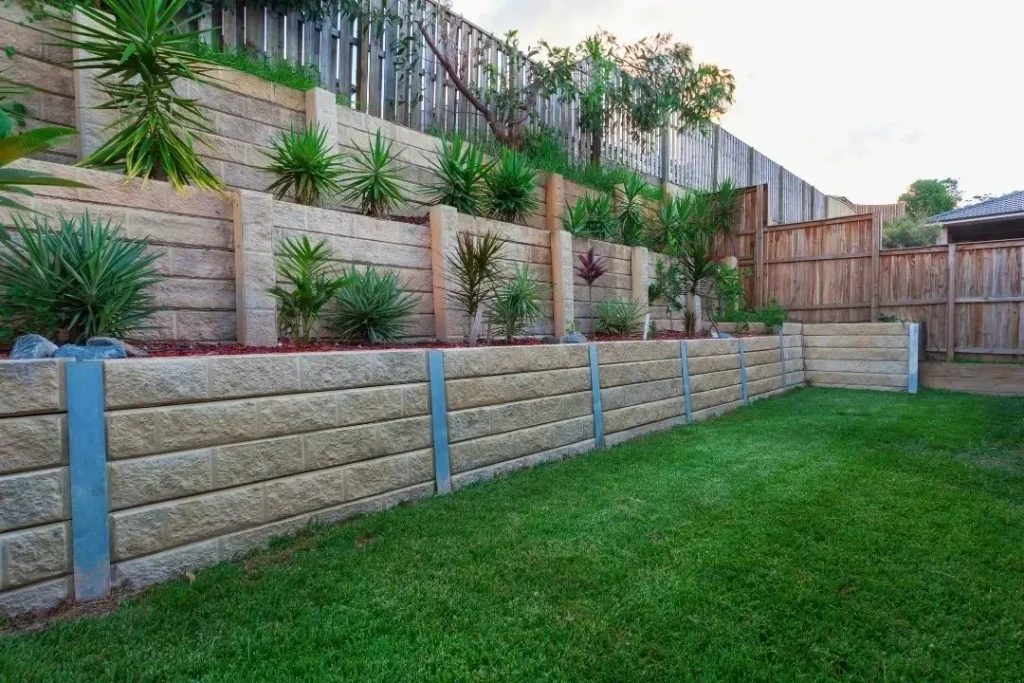
Concrete sleepers are widely used across Ipswich because they handle Queensland’s wet seasons, clay soils and steep gradients well. They are precast, consistent in size, and do not rot, warp or attract termites. For walls over 600mm in height, they are often the most structurally reliable option available.
Concrete sleepers sit between steel galvanised H-posts and are available in a range of finishes including plain grey, woodgrain texture and exposed aggregate. The posts are set in concrete footings sized to the wall height and soil conditions, and the wall must be designed to resist the lateral pressure the retained earth places against it which is a key consideration that Cement Concrete and Aggregates Australia covers in their guidance on residential retaining wall design.
For most residential retaining walls in Ipswich, concrete sleepers offer a strong balance of cost, longevity and low maintenance. Expect to pay more upfront than timber, but significantly less in ongoing repairs over a 20 to 30-year lifespan.
Timber Retaining Walls: Lower Entry Cost, Shorter Lifespan
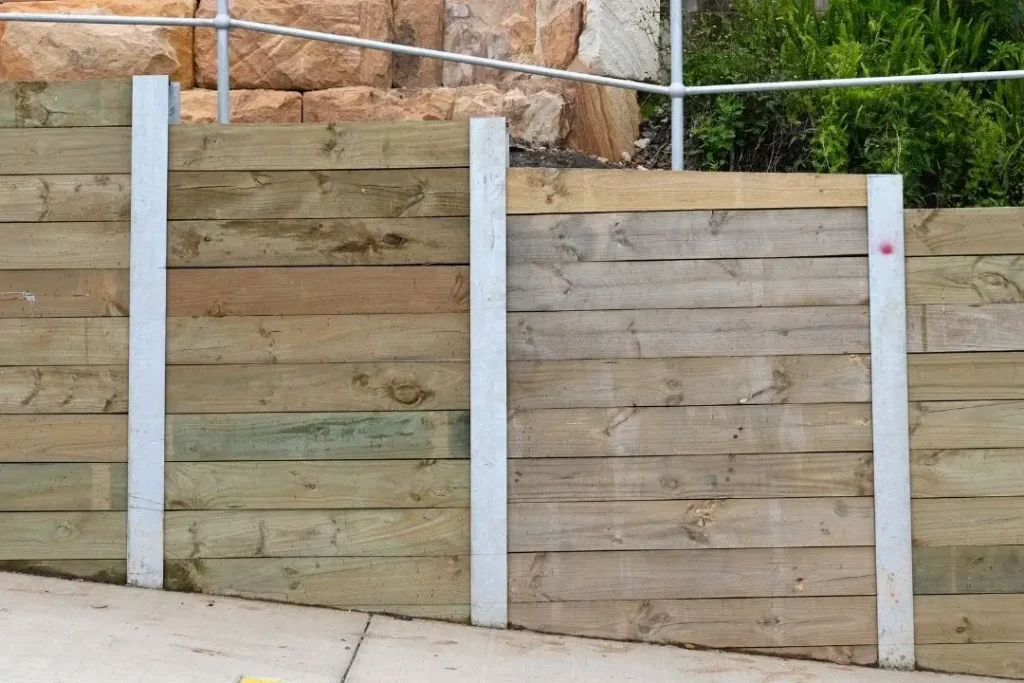
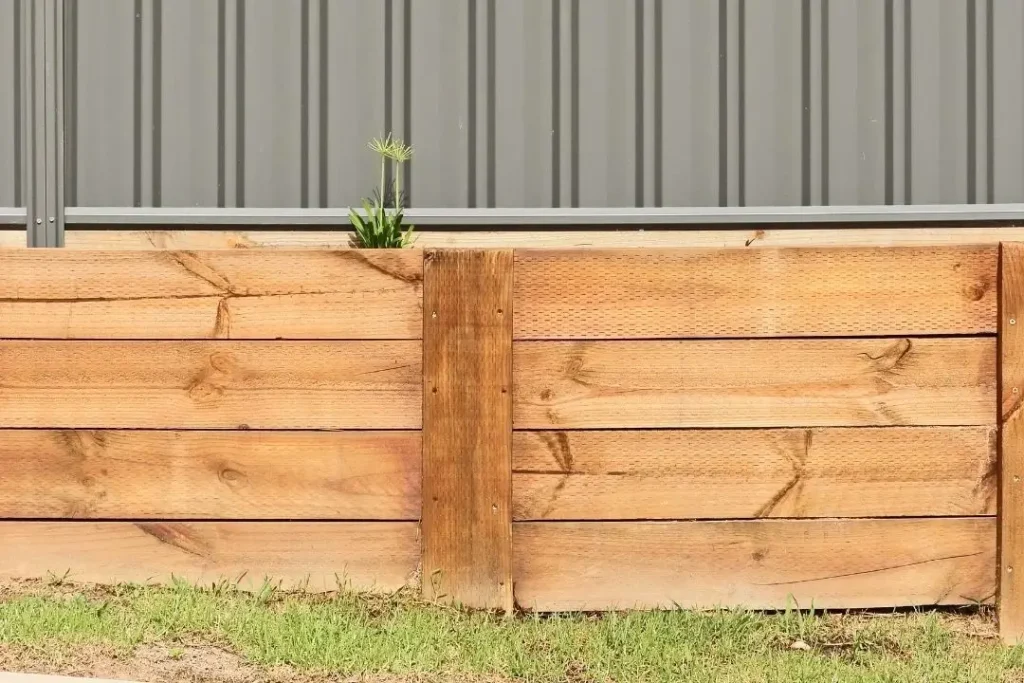
Treated pine has been a standard retaining wall material for decades. It is affordable, easy to work with, and suits smaller walls on flat or gently sloping blocks. Most residential timber walls use H4 or H5 treated pine, which are rated for ground contact and in-ground use respectively.
The H rating system determines which grade suits each situation, and using the wrong one in a wet or in-ground application leads to premature rot and structural failure.
Timber walls typically last 15 to 25 years depending on drainage, soil contact and maintenance. They are a reasonable choice for low walls under 600mm or for garden bed edging, but they are not the best long-term investment for taller structural walls.
Concrete Block Retaining Walls: Solid, Versatile and Visually Flexible
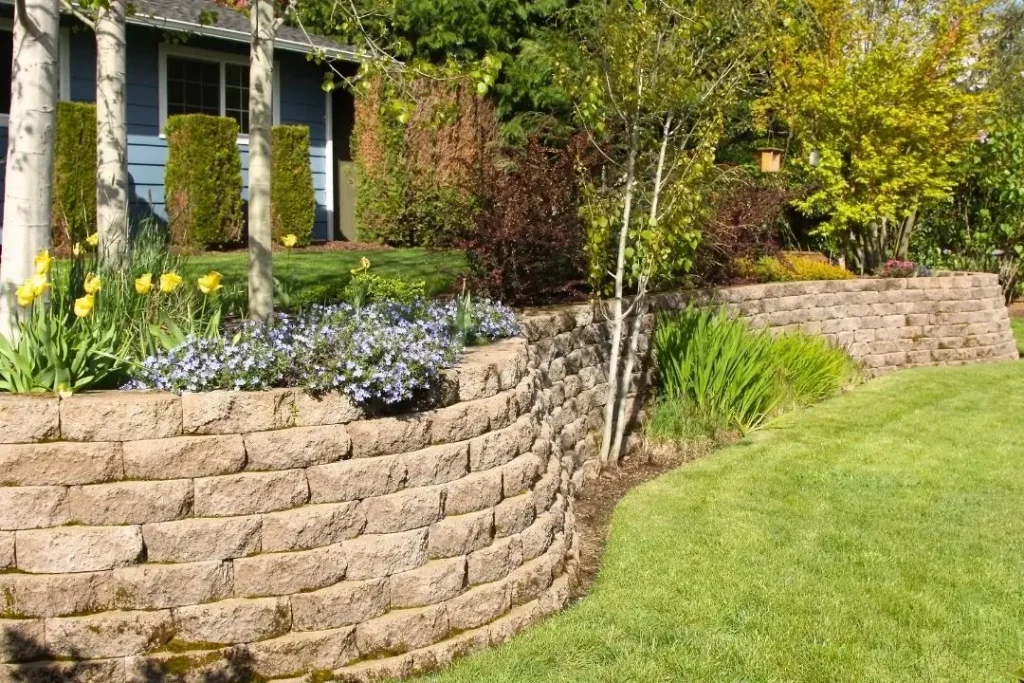
Concrete block walls, sometimes called segmental retaining walls, use interlocking or mortared masonry blocks to create a solid structure. They are well suited to curved layouts, tiered gardens and situations where appearance matters as much as function.
Smaller gravity-style block walls can be built without steel reinforcement for low heights, but taller walls typically require a concrete footing, core filling and vertical steel reinforcement. This adds to the cost and complexity but produces a wall that can handle significant lateral soil pressure.
Concrete block walls are a good fit for front yards, pool surrounds and visible retaining structures where you want a clean, finished look. They cost more per metre than timber but less than natural stone, and they hold up well in Ipswich’s variable soil and weather conditions.
Sandstone Retaining Walls: Natural Appearance, Higher Labour Cost
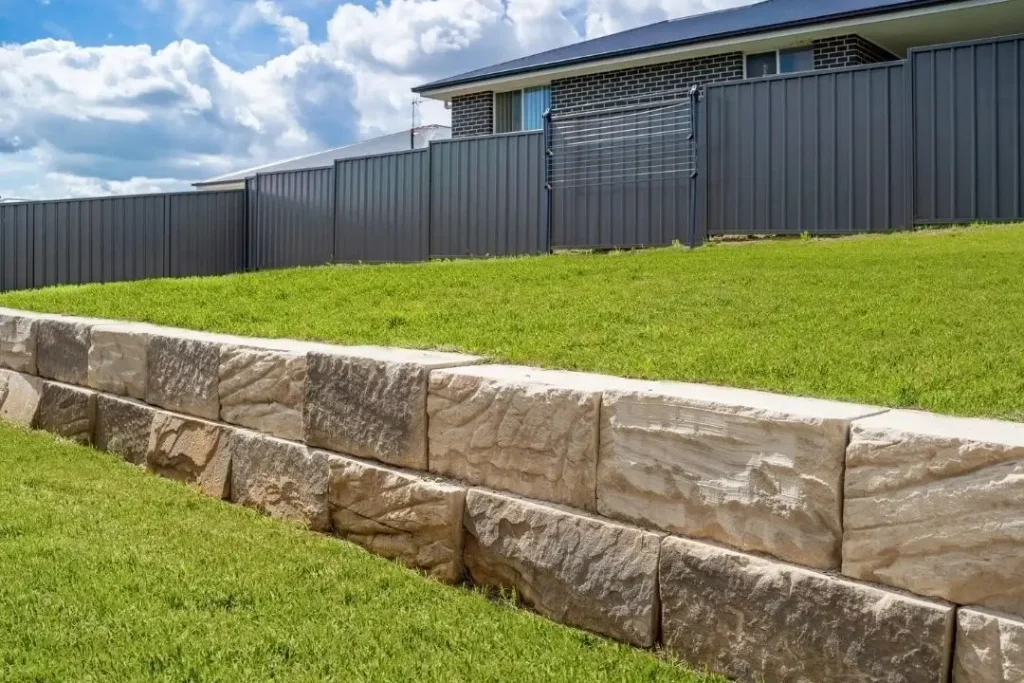
Sandstone is a popular choice for homeowners who want a natural, organic look that blends with the landscape. It is particularly common in older Ipswich suburbs and on properties with established gardens where a more traditional aesthetic is preferred.
Dry-stacked sandstone walls rely on the weight and friction of the stone to hold back soil, which means they need careful placement and good drainage behind them to perform well. Mortared sandstone walls are more stable and better suited to taller applications, but they require skilled labour and take longer to build.
The main drawback with sandstone is cost. Labour is intensive, and quality sandstone is not cheap. For a decorative garden wall or a low retaining feature under 600mm, it can be a worthwhile investment. For a structural wall holding back a significant amount of soil, the cost-to-performance ratio often favours concrete sleepers or block.
Composite Sleepers: A Newer Option Worth Considering
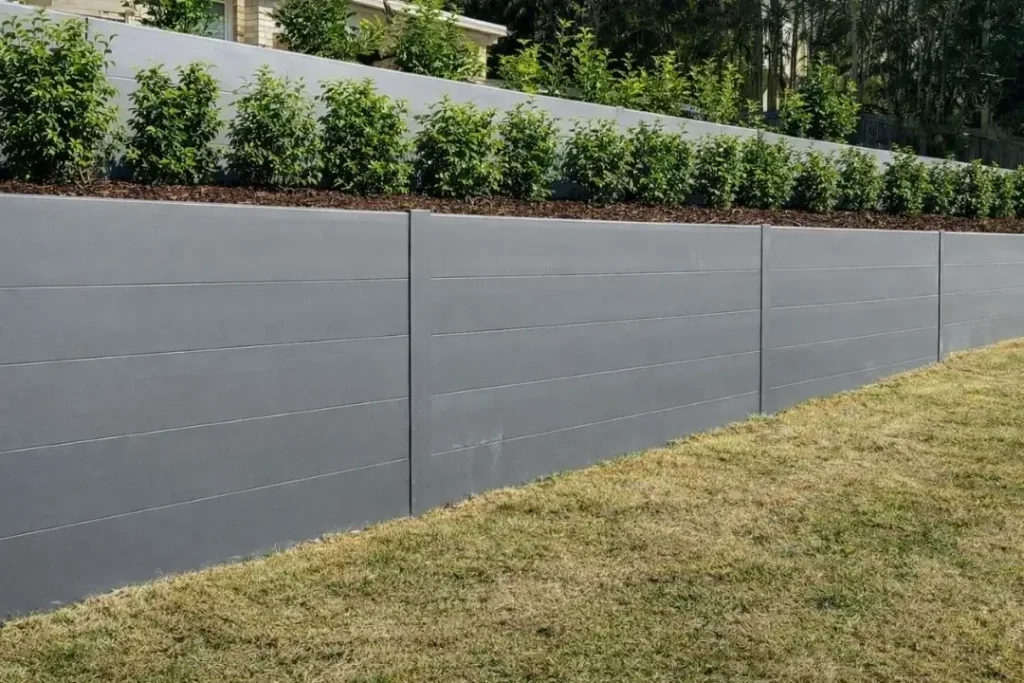
Composite sleepers are made from recycled plastic and wood fibre, giving them the appearance of timber without the susceptibility to rot, termites or moisture damage. They are growing in popularity as a mid-range alternative to both treated pine and concrete.
Composite sleepers are lighter than concrete, which makes them easier to handle on difficult sites with limited access. They do not require the same post-and-panel system as concrete sleepers, and they hold their appearance well over time without painting or sealing.
The cost of composite sleepers sits between treated pine and concrete, and their lifespan is generally longer than timber. They are a practical choice for medium-height walls where access is tight or where you want a timber look without the maintenance commitment.
How Wall Height and Site Conditions Affect Your Material Choice
Material selection does not happen in isolation. The height of the wall, the type of soil, the slope of the land, drainage conditions and access to the site all influence which material is practical and which is not.
In Queensland, retaining walls over 1 metre in height typically require council approval, and walls over certain heights must be designed by a structural engineer. This applies regardless of material. If your site has expansive clay soils, which are common across Ipswich, the wall design needs to account for soil movement, and not all materials handle that equally well.
Working with experienced retaining walls contractors Ipswich homeowners trust means getting advice that accounts for your specific site conditions, not just a generic recommendation based on price alone. The right material for a flat block in a new estate may be completely different from what suits a steep, clay-heavy block in an older suburb.
What to Think About Before You Decide
Before committing to a material, consider the height of the wall, whether it is primarily structural or decorative, and what access is like on your site. Your budget should account for drainage and any council approvals, not just the wall itself.
If any of those factors are unclear, a site assessment is the most reliable way to narrow down your options. A contractor who looks at your slope, soil type, and drainage before recommending a material will save you from a costly decision made on price alone. It also helps to have a clear understanding of what a retaining wall is and what it actually does before those conversations start.
Talk to a Local Contractor Before You Commit
If you are weighing up materials for a retaining wall project in Ipswich, a conversation with a local contractor is the most practical next step. Site conditions in this region vary considerably, and what works well on one block may not suit the next.
For retaining walls Ipswich homeowners can rely on for quality workmanship with all these materials, call (07) 3485 0611 to speak with Justin directly to discuss your site and get a clear picture of your options.